
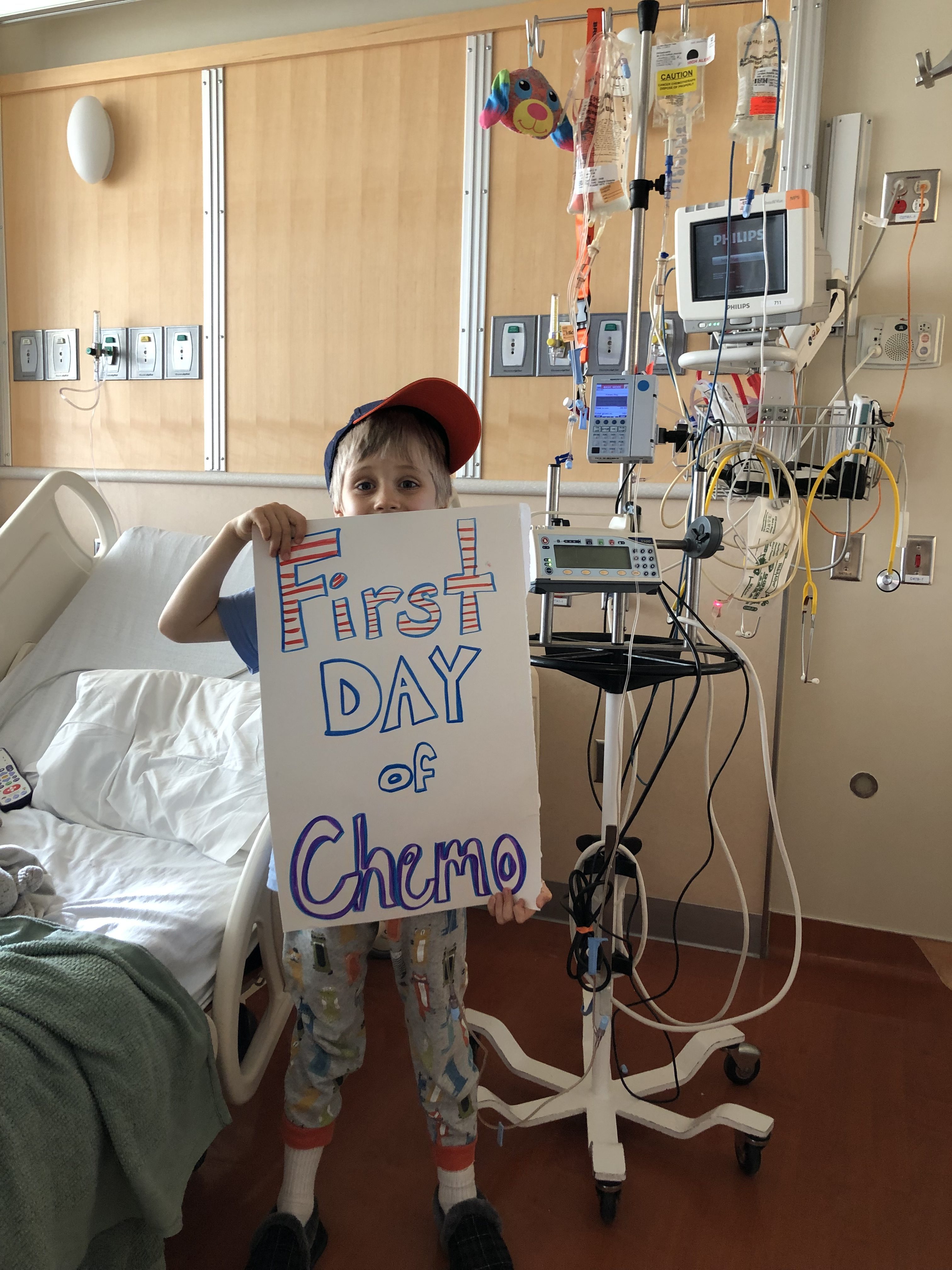
This post reflects our experience under the Children’s Oncology Group (COG) protocol 9032 for Standard Risk acute lymphoblastic leukemia. Treatment plans vary. Always consult your child’s care team for guidance specific to your child.
Induction is the first phase of frontline treatment. It is usually 28 days. Frontline treatment refers to the initial portion of the 2–3 year course of therapy for acute lymphoblastic leukemia.
· · ·
Days Spent Inpatient
Days 1–4 to begin treatment, and Days 7–18 to treat a staph infection.
· · ·
Medical Details
- Beau’s Day 29 bone marrow aspirate showed less than 0.01% leukemia, setting the course for Standard Protocol moving forward.
- 2 bone marrow aspirates
- 1 permanent port placement
- 3 intrathecal chemotherapy doses via lumbar puncture
- 5 doses of various IV-administered chemotherapies
- Daily steroid pills
- 16 days of twice-daily blood thinner injections (see Post Script below)
- 2 weeks of antibiotics to treat a staph infection
· · ·
Chemotherapy / Treatment Symptoms We Had
Fatigue
Compared to how he had been since early December, it wasn’t markedly different though compared to normal, his energy was very low.
Frequent urination
We also had a 1,500 ml daily intake minimum in the hospital, which likely contributed.
Weight gain (Steroids)
Noticeable in his face and belly.
Voracious appetite (Steroids)
NEVER wanted to stop eating. Popcorn was the main craving. We required him to eat a plate of vegetables between every carb binge. It mostly worked.
Emotional swings (Steroids)
Both tears and laughter—noticeable, but not unmanageable to anyone who has ever raised a toddler.
Leg and hip cramping
Severe cramping on Days 6–8.
Insomnia
Notable on Day 18.
Blood clot
Developed shortly after port placement surgery and a PEG chemotherapy dose on day 4. Cause unknown.
· · ·
Chemotherapy / Treatment Symptoms We Missed
Constipation
Oh hey, real talk. Beau had 3–4 bowel movements daily. I attribute this to his vegetable intake (4–6 servings per day). Doctors told us constipation is usually a given with steroids because they cause intense cravings for salty carbs. Glad we avoided this one.
Hair loss
None yet. Doctors initially said he would likely lose it by Day 14. Then “within the next two weeks.” Here we were at Day 28 with a full head of hair. Who knows. Most parents anecdotally report hair loss during Delayed Intensification.
Immobility
Steroids often leave kids close to immobile by Day 28. Beau had a few significant days of muscle cramping, but otherwise did okay.
· · ·
The Hardest Part of Induction
So much about this month was hard. But the biggest adjustment was learning that our kid had cancer.
Knowing he had cancer—without knowing what that would look like day to day—left a lot of room for idle thoughts and what-ifs. Each day we lived inside this new reality, it felt a little less sharp. A little more survivable.
· · ·
Biggest Surprise of Induction
Beau has been kicking butt with needles, which is a God-send.
If you had told me before this started that we’d be giving him twice-daily blood thinner injections, accessing his port weekly, and doing frequent blood draws, I would have said, “FORGET IT!!!”
· · ·
Additional Notes

Beau started wearing his face mask with more confidence by month’s end. We got him a non-disposable one. I’m not entirely sure of its efficacy, but something felt better than nothing. We planned to return to disposable masks if his ANC dropped below 500, when infection risk is highest. Our team suggested that masks are really only required below 500, and at that point it’s best to just avoid being in public as much as possible.
Once the chemotherapy really kicked in, Beau’s blood counts recovered nicely and stayed high through the end of the month. This allowed us to be in public with slightly less concern—though still lots of hand washing and “don’t touch that!”
Our household became quickly acclimated to all things medical, thanks to twice-daily blood thinner injections and accessing Beau’s port at home during the days between his hospital discharge and finishing the IV antibiotics.
· · ·
Post Script: Blood Thinners
Beaudin adjusted well to twice-daily blood thinner injections while inpatient. Once we got home and filled the prescription at our local pharmacy, it was another story.
The pharmacy provided standard pre-filled syringes with a very different needle size. Let me tell you about the screaming.
The morning after our first home dose, I called pharmacies all over the county looking for a 26g ⅜-inch, 1 ml TB syringe and a vial of the medication—trying to replicate the administration that had gone so seamlessly in the hospital. This was not easy. Pharmacists were convinced that syringe size (typically used for TB testing) wasn’t appropriate.
After many pointed phone calls between our nurse and the pharmacies, we finally got it approved and prescribed. It was a total game changer. As it turns out, the needle size on a pre-filled adult syringe is measurably different. (Ask Beau.)
Please email me if you have questions about this.


Leave a Reply